
Introduction
In the fall of 2024, Puerto Rican singer Pedro Capó came to Chicago for a concert as part of his national tour. The concert took place at the Ramova Theatre in Bridgeport, on the South Side of Chicago, a venue that created a sense of intimacy and community. The audience, mostly Latinos, greeted him excitedly and, as the concert started, belted out the lyrics of his songs in unison. We became a single audience of backup singers. The crowd offered lively vocals for his most popular songs, like “La Playa,” as well as newer ones, like “Esto Se Jodió” (2024). Then everything shifted when he sang “Quiero Volver a Casa.” The song is the hymn of the desterrados, the displaced, the uprooted. It captures the need for home, the need to return. The singer’s desire to go home is reiterated across the song. In the song, he reflects on how simple everything felt in childhood, before the weight of constant movement, missed moments, and accumulated distance set in. Experienced together with hundreds of other Latinos, the song became something larger: an anthem for what migration scholars have called: the “immigrant/migrant’s dilemma.” It speaks to how return migration, however deeply desired, is complicated by work, family, and the accumulated demands of a life built elsewhere. Immigrants/migrants leave home perceiving the move to be temporary and live the rest of our lives thinking about and longing to return.
Anthropologist Jorge Duany (2002) coined the term vaivén for the circular and constant coming and going between mainland communities and Puerto Rico. The literature on Puerto Rican migration has captured the struggles of this vaivén. We know from the vast social science literature that the vaivén is frequently connected to the fragile dynamics of working-class families surviving on the edges of more than one hundred years of U.S. colonialism, where migration is a way to survive (Ortiz, 1994; Torres, Rodriguez-Vecchini and Burgos, 1994). We have learned, too, that professional and middle-class migrants have joined working-class and poor Puerto Ricans in the experience of the vaivén (Alicea, 1997; Aranda, 2007). The vaivén may be short, frequent, or long-term, and it is at the root of why Puerto Ricans are frequently called a “nation on the move” (Duany, 2002).
Using my life story and that of a few others, this essay interrogates the predicament of home and return, two categories that are often treated as two sides of a coin, singular and separate from each other. I have lived a life constituted as a vaivén. Every year without fail I returned home, yet until recently I didn’t conceptualize it as a “return.” As I frequently put it to my friends: “I went home.” What happens when we deconstruct the notion of “return” and recognize that the process is as complicated as migration itself? What happens when there isn’t a singular return but many? What happens to dreams of return when you are rooted in a vaivén?
I offer here a reflection on a lifetime of returns and departures. Drawing on the work of anthropologist Hilda Lloréns, this essay is about the ontological turbulence underlying our lives. As she puts it, “turbulence is central to our ontological reality” (Lloréns, 2021, p. 12), and living unfolds within the taken-for-granted knowledge that instability, uncertainty, unpredictability, and change are core features of life. This essay contributes to the layering of our analysis of what constitutes migration and return. It aims to make visible the tensions inherent in the migration-return spectrum of Puerto Rican lives. Lloréns calls this kind of work “home-work.” As social scientists we are trained to think of the world as compartmentalized into “out there” and home. For many of us, “out there” is home, and what we seek to capture are the details that have shaped our lives, migrations, and returns. In other words, this is not about a world out there; this is about my world, my barrio, my town. The process of writing autoethnography contributes to revealing new insights, asking new questions, and exploring tensions in more systematic ways (Toro-Morn, 2018).
The essay has three parts. First, I introduce my community and a sample of the families who constituted it and who built a lifetime of migrations and vaivenes. Then I offer a short overview of my own family’s migrations, a family fractured by migration and by the impossibility of return for some of its members. In the last part, I offer an account of my vaivén as a form of return, of many returns, and consider what it does to my understanding of the migration process.
Mi Pueblo, Mi Barrio
The history of Cabo Rojo is intertwined with the histories of race, social class, and gender as they have taken shape more broadly in Puerto Rico. On the tourist websites that now abound online, Cabo Rojo is known as the town of beautiful cliffs, salt flats, and pristine beaches. It is also home to one of the island’s most important anti-imperialist and anti-colonialist, Ramón Emeterio Betances. My neighborhood, La Bajura/El Coquí, is part of a community area in the town area known as Monte Grande. La Bajura was built on the site of a former hacienda where many families had once been enslaved.
Migration is another thread that places Cabo Rojo within the larger historical and diasporic landscape of Puerto Rico. Many families from Cabo Rojo left for New York City throughout a significant part of the twentieth century, including in the aftermath of Operation Bootstrap. I grew up hearing of a group from Cabo Rojo who frequently returned to the town during Las Fiestas Patronales in September. They called themselves “Los Caborrojeños Ausentes.”
My own neighborhood offers a microcosm of those migrations. A cursory listing of the families who made up its core reveals families split by multiple migrations and stories of migration and return, all complicated by the larger sociohistorical context of cities undergoing labor market changes and discarding Puerto Rican workers and their families. Families in my neighborhood of El Coquí migrated to New York City and Chicago, the two sites long recognized as traditional destinations for Puerto Ricans. El Coquí is a working-class, working-poor neighborhood of Cabo Rojo, the kind of place you pass through if you take the old road from Cabo Rojo to Mayagüez. The neighborhood is a single street, its houses built practically on top of one another, fractured by the dreams of modernity, by migration, and now by the precarity of neoliberal colonial life. The Oscar Rubio family lived on the main road, and their family was fractured by migration too. Their family gatherings included cousins coming home for the holidays in December. The matriarch of the family, Doña Amanda Rubio, was a Black woman who had lived and worked in New York City and returned to live with her son, Oscar, in what became a multigenerational household. Doña Amanda was a towering figure in my childhood memories. The Reyes family introduced our neighborhood to Chicago, a city many of us imagined was right next to New York, since New York was the main destination of most of the families in the barrio. The Reyes family, too, was fractured by migration, and by the time I got married in the late 1980s, Reyes y Mayo, the heads of the household, had settled permanently in the neighborhood. Their journey of migration ended where it started, in El Coquí. Their daughters and sons then engaged in the vaivén of caring for them. To my knowledge, their family was spread throughout Chicago and the suburbs of Illinois. Both Reyes and Mayo aged and died in the neighborhood, and the family mourned them transnationally, but didn’t return like Reyes and Mayo.
My childhood memories are filled with the constant movement of people in the barrio. Who moved? Everyone was involved in the vaivén. I can say categorically that most of the families in my neighborhood were involved in migrations and returns. In the 1970s and 1980s, the carros públicos were the main way to travel between towns and airports. A carro público is a privately owned car that transports people from town to town for a fee. Imagine that, before there was Uber, we had carros públicos in Puerto Rico. They still exist, but the flotilla of cars that moved people between towns is no longer as robust. This was a job for working-class men to earn a livelihood, similar to a bus driver today. Invariably, families arrived in the middle of the night, and the excitement woke people up. In the morning, greetings and stories of life allá became part of the rituals of the vaivén and the barrio’s chisme (gossip). Departures were just as memorable, though less joyful. Families aged in the vaivén, and the crisis of care for the elderly became part of the narrative of migrations and returns.
Eventually, I added my own chapter to my barrio’s history of migration when I left for Illinois to pursue my studies in sociology and began my own vaivén to be with family during the holidays. My family grew, and my vaivén became part of barrio life too. Coming and going with my son Carlitos and my husband Frank was the source of many neighborhood gatherings.
The Family Fractures of Migration
My family’s story also maps onto these stories of migration. These are broad-stroke notes because I have yet to do the archival research to confirm the stories and biographical details. My mom, Rita Segarra, and her brother, Dámaso Segarra, lived with their grandparents (José Segarra and Nicolasa Montalvo) in El Coquí. Their mother died when they were young, and their father, Carmelo Segarra, left for New York City. I don’t know how much contact they had with him, but I do remember the day my grandfather, known to me as Papa Carmelo, returned to live in Cabo Rojo after what I can ascertain was a lifetime of work in New York City. His was a permanent return migration. Shortly after he returned, he died of a stroke. His widow, my step-grandmother, Clotilde Segarra, stayed in Cabo Rojo permanently until she too passed away. Clotilde had a son who lived in New York and visited her often. My uncle, Dámaso Segarra (Tío Ramón), also left for New York City, but he never returned. He was violently killed in the streets of New York, a crime that to this day remains unresolved, and his children were left orphans. He was a single dad raising three children on his own; he had divorced his wife and had full custody of Alma, Ramón, and Joseph. I knew these cousins existed, but for me they were ghosts of my mom’s familial past. I only knew their first names, which headed the list of people she prayed for. During the last stages of my mom’s life, I was able to reunite with Joseph, one of my cousins, and have started to fill in some of the details of their lives. They do not have a connection to Puerto Rico the way I do. I suspect they may consider themselves only minimally Puerto Rican. Migration fractured our family and those of the people in my neighborhood.
My Vaivén, a Life in Between
My life has been defined by the vaivén. In other words, I have constructed a family life coming and going with my family. Those are the fractures created by migration. Mine was not a single permanent move and return but a yearly vaivén, each entry and exit as complicated and painful as the last. Through a life-course analysis, I can offer at least three moments of intervention here. First, my vaivén was anchored by my gendered obligations to my mother and my family, obligations that didn’t end when I left Puerto Rico in the early 1980’s. They became more complicated.
I left Cabo Rojo to pursue graduate school in Illinois. I could not return home the first year because I could not afford the ticket to fly home. But every year since then, I have returned home like clockwork, first during the Christmas holidays and, when I could afford it, in the summer or early spring. December was (and still is) the month of return because of the break in my academic calendar. First in graduate school and later when I took a permanent position as a faculty member, December trips were nonnegotiable for me and my growing family. The power struggles of my adolescence with my mom resurfaced during my vaivén. She insisted on making the rounds to visit relatives, abuelos, and other family members, going with her into town, helping with chores, and taking her to the casino. I wanted to go to the beach, rest, and relax. The result was a lot of conflict, but she always won.
There were also many pilgrimages to the Virgen de Sabana Grande, which I made for self-serving reasons: the space to connect with my mom. What happened during that time? It is hard to remember all those years, but what comes to the surface now is the intensity of the difficult questions: Once you finish your doctoral studies, when are you coming back? What are you going to do?
After I completed my doctoral studies, I took a tenure-track job at Illinois State University. The questions ceased, but the vaivén intensified. Nothing was said between us about the decision. It simply was, and we dealt with it in the same way that we had dealt with departures and returns. A significant moment for me was when my son was born and my mom overcame her fear of flying to come to Normal, Illinois, and added her own chapter to the family’s vaivén. For the first eight years of his life, she visited, staying for longer periods and providing early childcare that was important to me in continuing my academic work. She cooked meals for us, cared for Carlos, and read to him in Spanish. In 2008, she suffered a debilitating stroke that left her unable to move without assistance. That summer we moved her into a nursing home in San Germán. Those were the most difficult periods of the vaivén because it entailed providing care for her during the last periods of her life (Toro-Morn, 2018). My mother died on September 23, 2011. I was in the hospital with her when she died.
Conclusion
There is no easy way to conclude this piece other than to say that documenting, interrogating, and writing about migrations, my own and others’ is difficult at many levels. My vaivén has been a luxury afforded by Puerto Rico’s colonial condition and the U.S. citizenship that came with it. The question of return is still pressing, but now it is my brother who asks: Are you coming back? When are you coming back? I am still living in the vaivén. The movement back and forth has not ceased. Tickets have been purchased for our December trip. Return is yet again imagined. The vaivén continues, as it has before. At this stage of my life, the answer to my brother’s question is left pending. Pedro Capó’s song is as relevant now. As Pedro Capo and Richi Lopez write: “Te juro por la madre mia, solo pienso en volver, volver de nuevo a casa, echarme a correr, volver de nuevo a casa, pero después se me pasa, no sé si te pasa también.”
References
Alicea, M. (1997). “A chambered nautilus”: The contradictory nature of Puerto Rican women’s role in the social construction of a transnational community. Gender & Society, 11(5), 597-626.Aranda, E. M. (2007). Emotional Bridges to Puerto Rico: Migration, Return migration, and the Struggles of Incorporation. Rowman & Littlefield.
Duany, J. (2002). The Puerto Rican Nation on the Move: Identities on the island and in the United States. University of North Carolina Press.
Lloréns, H. (2021). Making Livable Worlds: Afro-Puerto Rican Women Building Environmental Justice. University of Washington Press.
Ortiz, V. (1994), “Circular Migration and Employment among Puerto Rican Women.” Latino Studies Journal, 4(2):56-70.
Toro-Morn, M. I. (2018). Migration and gendered webs of obligation: Caring for my elderly Puerto Rican mother in a transnational context. In C. Wellin (Ed.), Critical Gerontology Comes of Age: Advances in Research and Theory for a New Century (pp. 225–242). Routledge.
Torres C., Rodriguez-Vecchini, and Burgos, W. 2004. The Commuter Nation: Perspectives on Puerto Rican Migration. Rio Piedras: Editorial De la Universidad de Puerto Rico.
Author Bio: Maura I. Toro-Morn is Professor in the Department of Sociology and Anthropology at Illinois State University.
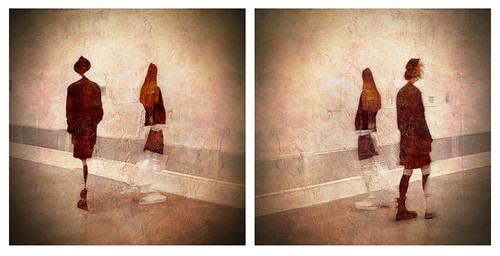
Featured Image: “Coming and Going” by Karen Axelrad on Flickr. August 3, 2021. CC BY-NC-ND 2.0