
“There is always something left to love.”
― Gabriel García Márquez, One Hundred Years of Solitude
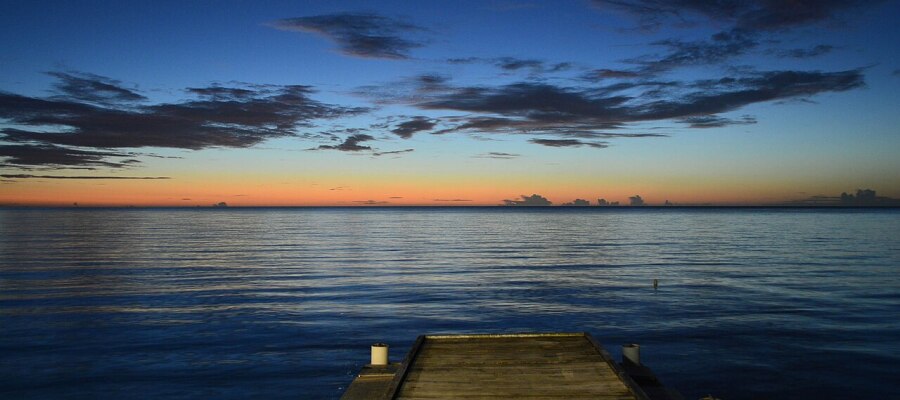
As a child, I looked fondly at the horizon. I stood on the shoreline at Playa Buyé in Cabo Rojo in the 1970s and looked at that clear, beautiful line separating the sea from the sky, which became even more spectacular at sunset. As a middle-aged woman, I now look with the same fondness at the horizon separating the Pacific Ocean from the sky in Newport, Oregon, which also becomes more spectacular when the sun is setting. Two points in time and two points in space, intersecting through me. A timeline structured by two repeated experiences (because it was not just once that I looked at the horizon in either locale).
According to Daniel Rosenberg and Anthony Grafton (2010), “all temporal language is contaminated by spatial figures” (13). Thus, a timeline is about both time and (metaphorical and physical) space. It helps a person to make sense of both and to turn experience into a history of sorts. Of course, events make it to the timeline under two conditions: (1) if the person remembers them, and (2) if the person chooses to include them. Because of this, timelines are highly subjective ways of tracking the “when” and the “where” of life experiences. In this essay, timelines become the connecting tissue between where I was at any one point and where I am today (both literally and metaphorically), while providing glimpses of my decades-long diasporic journey, a journey that is inextricably linked to my identity as a Puerto Rican and my work as a scholar. The essay confirms what Jorge Duany (2003) told us a while ago that “national identities flow and at the same time endure across many kinds of borders, both territorial and symbolic” (440). Identities both flow and endure.
The idea of timelines seems so appealing, as the more I’ve been able to place myself in the world, the more difficult it’s been to find a direct way (of looking, of reflecting, of living). It’s also been difficult to trace movement, including my own as a member of the ever-expanding Puerto Rican diaspora. Diaspora. That difficult and imperfect word. A word that many groups (like Puerto Ricans) have borrowed from its Judaic origins, and that as Brent Edwards (2003) argues, forces us to think not only of forced migrations and racialization, but also of “political linkages across and through difference” (17).[1]
I’ve also been thinking about quantum mechanics, as this branch of physics has allowed for the possibility of multiple timelines. And, I’m profoundly grateful to science fiction literature and popular culture for making it possible to envision multiple concurrent timelines, which is infinitely alluring, as it allows me to connect the child looking at the horizon line in Playa Buyé, with the middle-aged woman looking at the horizon line in Newport more than 40 years later.
Much has been said about the vaivén of Puerto Rican migrants (Duany 2003) and about circular migration (Duany 2002), that is, the coming and going of the Puerto Rican subject to and from Puerto Rico. But, I left Puerto Rico in 1993 and there is no date (neither short-term nor long-term) for my return. I continue to live “afuera” and “afuera” will remain.[2] The timelines perhaps will help me explain why. I will proceed with four short sections divided into three timelines and a concluding segment called “Of One Love.” The timelines are, of course, not mutually exclusive, as they touch, intersect, and sometimes collide with each other.
Timeline One
When I left Puerto Rico over 30 years ago, geographically, it was construed as one island,[3] and politically, as a Commonwealth. At the time, very few Puerto Ricans acknowledged that it was a colony.[4] Today, although nothing has changed geographically, many Puerto Ricans understand Puerto Rico as an archipelago, not just one island. And, although its official political designation is that of a Commonwealth, Puerto Ricans are more willing to accept the fact that Puerto Rico is also still very much a colony. An archipelago. A Commonwealth. A colony. That is Puerto Rico’s current burden, in the world. What does this mean in relation to this timeline? I was born and lived the first 23 years of my life on an island. I moved out of the confines of that island and now visit an archipelago. I lived in a Commonwealth, now I study and theorize both the Commonwealth and the colony for a living.
A timeline that speaks of existential shifts in how Puerto Ricans understand Puerto Rico and how we/they understand ourselves/themselves and take up space in the world. Of the three timelines I am discussing here, Timeline 1 is the broadest and most elusive, for it traverses time in a way that I can’t exactly pinpoint. For instance, when did Puerto Ricans finally understand that the smaller islands were not only part of the main island’s geography but also part of their own linguistic and political identity? When did they stop what they were doing and realize that they were carrying the weight imposed by the US in a way that made them colonial subjects? Where were they standing when all that happened? Living “afuera,” I missed experiencing those shifts as they were happening, which means that this timeline has a few voids. Mainly, timeline one traces a “before” and “after” of sorts.
Timeline Two
Speaking of before and after, I grew up and lived in Puerto Rico during the 70s, the 80s, and the early 90s, after which I joined the scattering of our people up north. Today, and for the last 30 some years, I’ve lived in and kept an eye on Puerto Rico from the locus of our dilemmas, so to speak, and very infrequently visit it. As you can imagine, given the three-decade span, the Puerto Rico I grew up in, and the Puerto Rico I visit are two fundamentally different places or spaces, but those spaces exist in me simultaneously, shaping my understandings about Puerto Rico. Understandings that can be a bit ambivalent toward each. One understanding isn’t worse than the other. The other isn’t better than the one. They are just different. Like the mofongo con caldo y chicharrón that used to be offered to me in every joint selling comida criolla gives me a different understanding of that dish than the mofongo con salsa criolla that they give me now. Like Section 936 of the U.S. tax code provided a different reality of the heavy U.S. economic imposition on the islands than the current Ley 60 in Puerto Rico’s tax code, which also with its own reality and set of impositions for Puerto Ricans. Or like the “bolero de loseta” that kids used to dance gave me a different understanding of Puerto Rican youth than the “perreo” they dance these days. Or like the expression “esta persona me está jodiendo la existencia otra vez” has a different edge than “esta persona me esta haciendo bullying,” which I now hear more often, as English phrases and linguistics quirks continue to make their way into Puerto Rican Spanish. So, …different. This is the most straightforward of the timelines, giving a glimpse of both small and monumental shifts in 21st century Puerto Rico as it sometimes runs concurrently with the previous one.
Timeline Three
For over a century now, migration and diaspora have run through our veins as a people and it has been our job to sort through the discourse generated by these experiences in a way that makes sense to us. To echo Stuart Hall (1989), “it is worth remembering that all discourse is ‘placed,’ and the heart has its reasons” (223). But I’ll talk about the heart (or love) in the final section. As I sort through the discourse of the Puerto Rican diaspora, though, I notice that it comes with a ready-made set of existential questions: Is Puerto Rico still home? (also, what/where/when is home?). What if I’ve lived abroad longer than I lived in Puerto Rico? (Where can we find the cutting point for this? After one year? Five years? Fifty years?). What if the majority of those who anchored me to the island are gone? (I have lost at least 10 family members since I left). Can I give my opinions on Puerto Rico’s status or have a say on what happens to Puerto Rico politically? (It is a colony and it shouldn’t be a colony!). Can I criticize its destructive political status even if I haven’t voted in Puerto Rico’s general elections since 1992? (The material destruction that the Commonwealth has caused in Puerto Rico has only gotten worse since I left). Can I tell all those #YoNoMeQuito that the only reason they are able to say that is because #YoMeQuité? (Why? Porque no hay cama pa’ tanta gente, mis amores). Would any Puerto Rican ever understand if I said that I love Puerto Rico today as much as I loved it when teary-eyed I jumped on a plane in search of a future but that I don’t see myself returning to the islands to live? (Like never ever). Can I talk about how immense and strong Puerto Rico seemed to me when I was younger, and how much smaller and frail it looks today after the local administrations (regardless of political parties) have decimated its potential and after several successive “natural” disasters have exposed its crumbling infrastructure (electricity, water, etc.) and a disappearing shoreline, which means that every major global event (like an economic recession or a pandemic) is amplified on the islands?
This timeline is the saddest, because it low-key includes a reckoning that extends decades of extractive management, of economic policies pushing Puerto Ricans away as more Puerto Ricans live in the U.S. mainland than in Puerto Rico, of climatological events and tourism-pandering developments eroding the coastal land, and of shady governments squeezing everything they can out of the islands and the people. It also speaks of my dwindling family, which means a sort of declining connection to the place that, for the first quarter century of my life, was the only place I knew. It is indeed a reckoning. A reckoning that says that Puerto Ricans are living in a perennial crisis, courtesy of U.S. imperialism, of racism.[5] A timeline of questions and issues. And honestly, I’m not sure this is a timeline at all. But I thought that perhaps the collection of thoughts could provide a semblance of an idea as to who and where we are as a people and who and where I am as a Puerto Rican today, a quarter into the 21st century. Combined with the other two, the timelines speak of leaving, of longing, and of love.
Of One Love
Whether these three timelines run parallel, whether they intersect, whether they speak of forgone times or mark contemporary mind-bending issues, there is one constant running through them: love. But, as Isabel Allende (2014) told us once, “fear gets in through the same aperture as love” (181). Which is why, to love Puerto Rico from the diaspora is to fear. To fear for the islands, and for what will become of them politically, economically, and socially. For their natural resources and environment (As I write this, Puerto Rico’s government is about to approve a multibillion-dollar, luxury development in my hometown, which will affect natural habitats and access to the beach for locals, and further strain the water supply). For the people, including the few friends and family, left on them as the electric grid crumbles, as prices continue to rise, as the hospitals continue to see an exodus of their medical personnel to the north, as water continues to disappear. For their diminishing employment opportunities. For their future (are they even able to envision a future for Puerto Rico or for themselves?). Fear is not perhaps the most productive manifestation of love, but in certain contexts, it reveals our uncertainties and sharpens our focus.
Love also places us in the time and space continuum that timelines so generously offer us. And here I would like to invoke African American writer James Baldwin (1964) who bravely proclaimed that “love will simply have no choice but to go into battle with space and time and, furthermore, to win” (59). Loving Puerto Rico in the times of crisis and disaster is a constant, special battle with space and time. This is especially so when your zip code no longer begins with a “0.” Or, when you contemplate your past and present, which seem crystal clear, but fail to envision an equally clear path ahead. And that special battle with space and time brings you back to the one love once again. This is when you realize that, perhaps unintentionally, Antonio Corretjer positioned us all (whether in Puerto Rico or “afuera”) so close to the moon and so far from Puerto Rico,[6] while el Conejo Malo made us cross two oceans and one continent with a cautionary tale about the 50th state of the American Union.[7] All of it so very exhausting for those of us in the diaspora. I am once more invoking Allende (2021) who also told us that “The hardest thing in love is to let go” (85). But, letting go (of Puerto Rico, of my diasporic timelines) is not an option, even if I wanted to. And not because it’s “the hardest thing,” but because all this is who I am and letting go would be unfair. Also, this is a type of love that requires a hanging in, not a letting go. A hanging in that is born of histories (both personal and cultural), and that, even if it’s not able to predict the future, carries with it a touch of hope. Thus, I will continue hanging in as I continue to watch, think, and love from afar. Because, regardless of how much the different governments and administrations continue to mistreat, undermine, and destroy that special place I grew up in, as García Márquez said in the opening epigraph, “there is always something left to love.” Always. All I have to do is look at the horizon.
Endnotes
[1] Edwards s speaking specifically about the African diaspora, which is a more heterogeneous diaspora than that of Puerto Ricans, as it involves different culture, nations, and countries.
[2] As Duany (2003) explains, afuera (i.e., outside) is the term Puerto Ricans use for talking about those who live in the U.S.
[3] “Socially,” Puerto Ricans have referred to Puerto Rico as “an island,” but geographically, Puerto Rico has always been constituted by one main island two smaller inhabited islands, and 3 other smaller uninhabited islands.
[4] Although Commonwealth is the official political name of Puerto Rico, given the parameters of its relationship to the U.S., Puerto Rico is also a colony. For more information of this, see Mónica Jiménez (2004) Making Never-Never Land and Pedro Cabán (1999) Constructiong a Colonial People.
[5] For a nuanced discussion of this point, please refer to the following works: Jorell Meléndez-Badillo’s Puerto Rico: A National History; Rocío Zambrana’s Colonial Debts; and Beatriz Llenín-Figueroa Affect, Archive, Archipelago.
[6] This is a reference to Juan Antonio Corretjer’s poem “Boricua en la Luna,” which includes the line “Yo sería borincano aunque naciera en la Luna.” (I’d be Puerto Rican even if I were born on the Moon). The poem was turned into a song by artist Roy Brown and many Puerto Ricans sing it as an homage to Puerto Rico.
[7] This is a reference to Bad Bunny’s song “Lo que le pasó a Hawaii” from his album “Debi Tomar Mas Fotos.” The song speaks of people in Puerto Rico being forced to move to the U.S. mainland by the abhorrent conditions on the islands.
References
Allende, Isabel. 2021. The Soul of a Woman. Ballantine Books.
Allende, Isabel. 2014. Maya’s Notebook. Harper Perennial.
Baldwin, James. 1964. Nothing Personal. Atheneum Publishers.
Coulson, Sienna and Critóbal Pagán Cánovas. 2010. “Understanding Timelines: Conceptual Metaphor and Conceptual Integration.” Journal of Cognitive Semiotics. Vol. 1-2, pp. 198-219.
Duany, Jorge. 2002. “Mobile Livelihoods: The Sociocultural Practices of Circular Migrants between Puerto Rico and the United States.” The International Migration Review, 36(2), 355–388.
Duany, Jorge. 2003. “Nation, Migration, Identity: The Case of Puerto Ricans.” Latino Studies, 1, 224-244.
García Márquez, Gabriel. 1967. One Hundred Years of Solitude. Harper Perennial Modern Classics.
Garriga-López, Adriana M. 2018. “The Other Puerto Rico.” Social Text Online. https://socialtextjournal.org/periscope_article/the-other-puerto-rico/
Grafton, Anthony and Daniel Rosenberg. 2012. Cartographies of Time: A History of the Timeline. Princeton Architectural Press.
Edwards, Brent Hayes. 2003. The Practice of Diaspora : Literature, Translation, and the Rise of Black Internationalism, Harvard University Press.
Hall, Stuart. 1989. “Cultural Identity and Diaspora.” Framework : The Journal of Cinema and Media. http://www.kitlv.nl/documents/library/338314997.pdf
Author Bio: Carmen R. Lugo-Lugo is a Professor of Comparative Ethnic Studies and American Studies and Culture at Washington State University, Vancouver.
Photo Credit: “Una cena en Joyuda, Cabo Rojo, Puerto Rico” by Cryo Mariena, CC BY-SA 2.0 via Wikimedia Commons
