
Resisting the American Dream: On Ayendy Bonifacio’s Dique Dominican
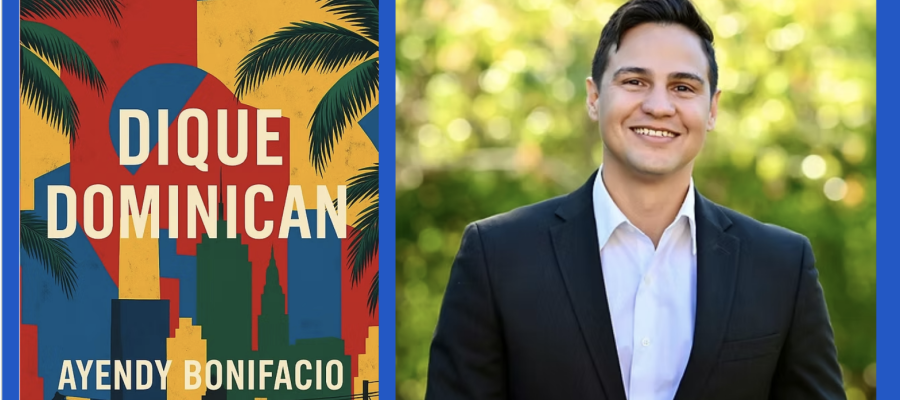
Ayendy Bonifacio’s memoir, Dique Dominican (2026), is a referendum on the American Dream. In Bonifacio’s hands, the narrative of uplift that characterizes the American Dream is an act of transubstantiation in which toxic masculinity transforms into toxic productivity, where the anger and frustration of an unjust world turns inward, eating away at the racialized body from within. A revised and expanded version of his memoir, Dique Dominican from 2017, the biggest update in 2026 is the narrative arc of the protagonist, known only as A in the book. Whereas the 2017 edition ultimately participates in the progressive narrative arc that characterizes immigrant literature, the 2026 text undercuts that arc, slicing up the six chapters from 2017 into twenty-two chapters that read as an oscillation from the present of the story to flashforward moments of reflection to flashbacks that retard the narrative progression of the previous version.
In Dique Dominican (2017), the individual chapters coalesce around a particular theme or moment and, while a subsequent chapter might jump further into the past than the current one, the overall effect is of moving forward in time. Bonifacio’s narrative follows that of the bildungsroman, or narrative of education. The memoir ends with graduate school rather than a marriage that would install the protagonist into the middle class like a typical bildungsroman. However, by ending with graduate school – or any form of school, really – the 2017 memoir signals its conformity to the immigrant bildungsroman in which education is the key to success.
For example, in this earlier iteration, Bonifacio includes the following sentiment after arriving in Ohio with Ñaño and Broder, the two friends who helped him move halfway across the country: “As soon as we started bringing my things inside the apartment, the place stared to feel like home […] With the context of every piece of furniture, book, and painting we brought inside, Columbus, the place I had considered distant and alien, was becoming home, and I was okay with it. My East New York apartment was physically and figuratively behind me” (98). The following section of the chapter discusses exploring Columbus with his friends, the overall sense of excitement palpable as A is on the cusp of starting a new life, one that promises to deliver on the American Dream that brought his father to the U.S. in the first place.
That said, the 2017 edition offers a bit of foreshadowing to the 2026 volume, a sense that all is not as good as it seems. Both texts end with a scene from Bonifacio’s days making deliveries for Tropicana, a day when A covers for his brother, Gabriel, only to be robbed at gunpoint. Thus, while in the story of A’s life’s unfolding we know he survives this moment and goes on to graduate school, it’s telling that both versions of the memoir end with this scene of mundane violence, a moment where A’s lifeline is measured out and potentially on the cusp of being cut. Dique Dominican enacts a form of what Elizabeth Freeman calls “temporal drag” where the pull of the past drags down the supposedly revolutionary present. The temporal drag of Dique Dominican in 2017 is that of the violence of the hood, one where a community eats itself; in 2026, the temporal drag is the relentless pull of the American Dream on the immigrant present.
It probably comes as no surprise, then, that the Columbus that is in the process of “becoming home” is absent in 2026, as is the description of the day exploring the town with friends. Instead, these moments are replaced by the racism A experiences in Ohio and at Ohio State. While the 2017 edition is published when Bonifacio is dissertating, and thus a graduate student who will soon graduate and need a job, the 2026 version is that of a tenured professor, one who has the job protections in place to speak more truthfully about his experiences. This is not to say that Bonifacio is dishonest in the 2017 text; it is to say that two things can be true at the same time. 2017 highlights the excitement and promise of graduate school; 2026 meditates on the disappointment and failure of institutions to make good on their promises, especially to immigrants.
The preface that opens the 2026 volume makes this clear. With the threat of deportation hanging over him and his brother in Trump’s America, where their respective statuses as naturalized citizen and permanent resident offer little protection (as we saw then and especially, now, during Trump 2.0) the mandate to be a perfect future citizen hangs over Bonifacio’s comments about toxic productivity. As he notes, “there came a point when my career as an English professor was taking off while I secretly dealt with some of the worst depression and anxiety I had ever experienced. I began suffering from prolonged abdominal pain that even today remains unresolved, with the cause unknown” (26). Rather than the excited A who began graduate school, Dique Dominican (2026) begins by illuminating how despite all the markers of success – marriage to a beautiful woman with whom he has an adorable child, a house, tenure at a research university, a book monograph, two poetry collections (one forthcoming), a memoir, and a forthcoming novel in addition to academic publications – the threat of death continues to loom large in his mind and even the security of an academic position cannot protect against the systemic violence he is still subject to.
Whereas in the 2017 memoir leaving the hood means (hopefully) leaving the threat of daily violence, as a professor in the 2026 version, systemic violence means that the mysterious abdominal issue might be something bigger and the racism of our medical institutions might choose to see a brown body over an educated one. As Bonifacio writes, “I thought about my mortality more often, my family health-history, and whether I’d be around next year or the year after that” (26). Living a middle-class life now, in other words, does not protect against epigenetics.
Dique Dominican (2026) continues what the 2017 edition started to do – link Bonifacio’s individual experiences to larger historical and cultural themes. Thus, when Bonifacio speaks about his ongoing health issues in academia, he also writes about the Black women in academia who have died prematurely. While Bonifacio is at pains to demonstrate that he does “not mean to equate [his] own feelings of pain or inadequacy with the historical and ongoing experiences of Black women and other women of color” (29), his point is clear: academia is a world that prevents Black women from thriving. Such a world is one that also prevents other people from thriving as well, including people of color more broadly.
Such thinking informs the revised memoir as a whole. For instance, reflecting on the Trump administration’s attempts to undo birthright citizenship and denaturalize citizens, Bonifacio notes how such policies “eerily mirror the devastating policies enacted in the Dominican Republic” (223) by discussing la sentencia, the 2013 ruling in the DR that “retroactively stripped citizenship from as many as 245,000 Dominicans of Haitian descent. The court’s decision overturned the principle of jus soli, or birthright citizenship, for the children of foreign-born parents and applied it retroactively to 1929” (223). At the same time I read about la sentencia in 2013, I remembered reading about Texas hospitals refusing to issue birth certificates to the children of unauthorized immigrants. While these cases were adjudicated in 2016, the Trump Administration’s attacks on immigrants and their descendants shows that we are far from past the threat to birthright citizenship in the US. While it’s commonplace now to observe Trump’s similarity to and veneration for Latin American dictators, Bonifacio’s memoir underscores that leaving the DR for the American Dream is almost like not leaving at all.
As Junot Díaz told us, the toxic masculinity that was the DR under the dictator Rafael Leónidas Trujillo Molina was an authoritarian state characterized by brutality, womanizing, and violence. While we know now that Díaz himself embodied this masculinity, in his 2026 memoir, Bonifacio rejects Díaz and the form of masculinity he represents. The 2017 text opens with a quote from Díaz, a quote that is removed in the 2026 memoir and replaced by quotes from Toni Morrison, Lorgia García-Peña, and Derek Walcott. While the decision to edit out Díaz and add in Walcott, a poet known for a string of sexual harassment cases, puzzles me, in the main Bonifacio leans into Black feminist writing as a way to write himself out of the toxic masculinity that informs his past and our right-wing present.
Brutal honesty characterizes the acts of violence that Bonifacio narrates in both editions of the memoir. The 2017 version opens with a scene featuring A arguing with is mother over his missing sister, Julissa. The scene is tough to read because of how viciously A speaks to his mother, using profanity and blaming her not knowing where Julissa is. The 2026 revision softens the scene somewhat, not by removing what was there before, but by adding reflection and framing, the viewpoint of a more mature, more healed narrator. The 2017 narrator was one focused on appearances, on being a good role model, as the following quote exemplifies: “I’ve told my friends and family countless times that we live in a vast country, and it would be wasteful and unfortunate not to explore more of it. But we must explore with purpose and character – go somewhere knowing who you are and why you are going. The hood taught me this” (93). The 2026 narrator, however, painfully reflects on his transition “from terrified to terror” (20), from the object of his father’s violence to the subject who enacts violence. As Bonifacio notes, both of the memoirs are a “reflection on the root of my anger, the hideous part of myself – the one I was, and am, most ashamed to talk about” (2026 19). This, I think is the true achievement of Dique Dominican (2026) – it takes up remains unsettled in the earlier edition.
Although Bonifacio characterizes both memoirs as about his anger, I would characterize the 2017 memoir as about pain and the 2026 revision as about healing. And yet, the tragedy of the 2026 text is that the narrator may be healed in terms of toxic masculinity, but he is far from healed from the wounds of the American Dream. In this way, Bonifacio participates in a growing body of Latinx authorship that critiques the American Dream and is on the precipice of arriving at something new. Here I’m thinking of Karla Cornejo Villavicencio’s The Undocumented Americans (2021) and Cristina Henríquez’s The Book of Unknown Americans (2015) in particular. I might also add Caro de Robertis’s Cantoras (2020) to the list, as an example of how queer life post-dictatorship in Uruguay is an opportunity for thinking about the “something new” we might arrive at after Trump. I have written previously about post-Trump Latinx literature, which is a body of writing I hope to return to if we are ever post Trump. The works above and Bonifacio’s Dique Dominican, especially as exemplified by his revisions, begin to form the contours of this body of work, where the American Dream is dead and we are all searching for a reason to continue living.