

In March of 1974, President Richard Nixon landed in Nashville to a mixed crowd of supporters and protestors. In the throes of the Watergate scandal, Music City was one of the few places the president could find a warm welcome of any kind. Members of the Grand Ole Opry, the radio show that had long helped popularize country music, invited Nixon to attend the opening ceremony of the newly built Opry House, and his appearance on the show was met with grandeur and thunderous applause. Nixon received a yo-yo tutorial from longtime Opry star Roy Acuff, and the president then played “God Bless America” on piano as country music fans sang along. Acuff’s voice cracked with emotion as he told the president “We are delighted to have you.”[1]
Not everyone in Nashville was as eager to welcome the blighted leader. Reports acknowledged demonstrators with signs that read “He Ain’t Country, He’s Crooked,” and “Opry Yes, Nixon NO, signaling the mixed reaction onlookers had to collaborations between the president and the country music industry. ”[2] Protestors calling for Nixon’s impeachment claimed he was “trying to use Nashville and country music to cover up his excesses.”[3] Such a statement was validated by the fact that there was little evidence to suggest Nixon was ever personally a fan of country music, but instead used it as a political tool, identifying its listeners as members of his targeted “Silent Majority.” Though country fans in truth represented a more politically diverse coalition, the Opry’s warm embrace of the president at the most fraught moment of his career confirmed that many country music fans and artists indeed represented his supporters.[4]
Nixon is far from the only prominent politician on the right to align with country music. The genre has often functioned as the cultural arm of the Republican Party, especially for the past half century.[5] In a mutually beneficial exchange, conservative politicians have commonly collaborated with figures in country music. Though there has frequently been little reason to believe these individuals personally enjoyed the genre, they have found benefit in linking their political visions with country music and its role as a signifier of whiteness, patriotism, and conservatism. Senators and presidential candidates, from Barry Goldwater to Ted Cruz, and presidents Richard Nixon, Ronald Reagan, and both Bushes (who did share a genuine fondness for the genre), all recognized the value of identifying country fans as their voters.[6] At Trump’s second presidential inauguration, nearly all of the musicians who performed were country artists.
Country music has enjoyed a renewed resurgence in recent years. Studies indicate its audience has risen since the beginning of the pandemic, with particular emphasis on the growth of Black and Latinx artists and fans.[7] These shifts are happening at the same time as Republican politicians and voters are becoming more racially diverse. But in both right-wing politics and country music, there is little evidence to suggest that increased racial diversity will guarantee a shift in racial politics that addresses structures of racial inequality or white supremacy. Republican policies continue to disproportionately harm many people of color even while gaining support from diverse voters and representatives.[8] As more light is shed on country artists and fans of color, there is likewise little reason to suggest the country music industry will deviate from longstanding practices of catering to white conservative listeners.
A deeper look into the past, present, and possible futures of Latinxs in commercial country music reveals how their presence has often worked to reinforce, rather than challenge, the genre’s racial and political definitions. Though Latinxs, like country music fans more broadly, defy strict racial or political categorization, the country music business has flattened such nuances when it has sought to incorporate Latinx artists and fans into the industry. Looking at the evolution of the Latinx presence in country music tells us something deeper about Latinx racialization over time. Specifically, how Latinxs’ occasional perceived adjacence to whiteness (in the case of non-Black Latinxs) by members of the country music industry has made the Latinx community an appealing target to be integrated into an industry centered largely on a white and heavily conservative audience.
As a genre primarily associated with the South, country music’s racial inflections have generally been understood along a Black/white binary with regard to those whothat have created and enjoyed the music. As such, questions have emerged about how Latinxs might alter that dichotomy. Rather than contest this structure, Latinxs have often “fit into racial binaries rather than disrupting them,” as Cecilia Márquez has argued.[9] The vast majority of Latinx artists who’ve achieved commercial success in country music have been white passing in name and/or appearance, or otherwise unable to openly and sustainably claim the genre as Latinxs.[10] The experience of Latinxs in the genre shows how anti-Black racism continues to dictate business practice in Nashville, the center of the country music industry, even alongside the addition of a handful of nonwhite artists.
Like the Republican Party of the past decade, the country music industry has also faced calls to improve its racial diversity. In 2012, the Republican National Committee’s “Autopsy” report issued an urgent message for the right to diversify racially, arguing that the party would not survive without extending its scope beyond white voters. Since 2020, the country music business has received its own versions of an “Autopsy” report, with studies highlighting the stark lack of diversity among its commercially successful artists. Reports indicate that just 3 percent of artists who appeared on the Billboard country chart between 2002 and 2020 were artists of color.[11] While Black artists have been severely underrepresented, even fewer Latinx musicians have found commercial success in the genre. According to one study, just 0.5 percent of songs that charted on the Hot Country Songs between 1944 and 2016 were recorded by Latinx artists.[12] The dramatic absence of commercially notable country singers of color can make it difficult to understand how a Latinx audience for the genre has been growing in recent years, as studies commissioned by the Country Music Association have revealed.[13] While this growth is not entirely new, it remains surprising to those who associate the music with a white, conservative, and even racist audience.[14]
Despite such low numbers of commercially successful Latinx artists, country has long been influenced by Latinx culture through the incorporation of western wear fashion and in the music itself.[15] When cowboy songs and Western Swing dominated country in the 1930s and 40s, mariachi sounds shaped the music of Bob Wills, as heard in songs like “San Antonio Rose,” or in popular numbers from Gene Autry like “South of the Border (Down Mexico Way).” By the 1950s, the clothing tailor Nudie Cohn bore a Mexican influence on his signature Nudie suit, seen on many of the biggest country stars of the 1950s and 1960s, thanks in part to his employment of the Mexican-born designer Manuel Cuevas. In recent decades, the emergence of the “beach cowboy” trope within country songs (along with, of course, tequila) has offered the most pronounced Latinx presence within country music, where the beaches of Latin America and Latina women have conjured images of white escape and leisure within the genre.[16]
Country music’s appreciation for Latinx culture without the inclusion of actual Latinx artists speaks to how the country music industry has long identified white conservatives as its core, targeted demographic. The genre was first invented as a marketing category in the 1920s, when New York recording industry scouts traveled to the South in search of new consumer markets and new artists to record. At the height of the era of Jim Crow segregation, the musicians recorded during these sessions were marketed along racial lines, resulting in the creation of two marketing categories: hillbilly and old time music, which was marketed to white southerners, and “race records,” which were sold to Black audiences. This segregated marketing strategy occurred even while Black and white southerners often played and enjoyed the same music.[17] Over time, hillbilly and old time records evolved into what we now call country music. But while the name of country music has shifted, its racial associations have not. In the decades following World War II, the rural white listeners who constituted the first generation of country’s targeted audience began migrating to the cities and suburbs and experienced social mobility.[18] By the 1960s, and alongside a larger Southern Strategy targeting white voters in the U.S. South, the genre increasingly became utilized by Republican politicians who sought to stoke white grievance and who imagined country music fans were also their voters. For example, Arizona Senator Barry Goldwater took out ads in country music publications during his 1964 presidential campaign. Throughout the 1960s and into the 1970s, George Wallace made several appearances at the Grand Ole Opry. In 1973, Nixon invited Merle Haggard to the White House to perform “Okie From Muskogee,” a song often described as the ballad of the Silent Majority.
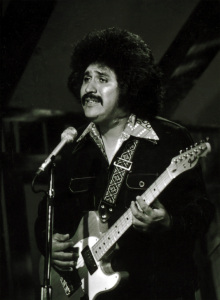
By the 1970s, a rise in diverse country artists and fans put the genre’s racial inflections into question. At the center of these discussions were Latinx artists, including Johnny Rodriguez and Freddy Fender, who achieved significant commercial success. Both earned multiple hits in country music, even while singing in both English and Spanish. But according to Fender (who in the 1950s had changed his name from Baldemar Huerta to “sell better with gringos”), the success of his biggest hit, the bilingual “Before the Next Teardrop Falls,” came as a surprise. As he later recalled: “I think that before [the industry] knew what was going on, my song was number one, it was too late. I don’t think they had a choice on whether they should accept me into their society or not … most of them didn’t think that I was a Hispanic, they didn’t know.”[19] Curiously, Fender interpreted his success as accidental since he had been presumed white.
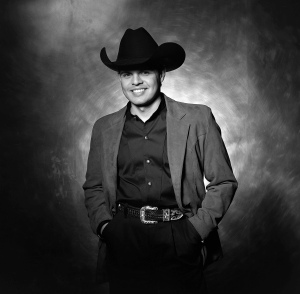
Again in the 1990s, discussions about Latinxs in country music received traction. Artist Rick Trevino explained his producer had long sought a Latinx country artist in hopes of capitalizing on a growing Latinx demographic in the U.S.[20] Though the country music business remained skeptical about marketing to Black listeners, Nashville sought to reach its Latinx listeners. Responding to studies on growing numbers of Black and Latinx country fans in 1996, Tim DuBois, head of Arista Records, expressed mixed interest, saying “I’ve seen those data, but I’ve also been to the concerts…Now in the South we have a big Hispanic following. But I am just not convinced that that percentage of black fans is real.”[21] Such comments summarize the historic relationship the industry has had when considering questions of how to broaden their audience racially, where the existence of Black fans are immediately dismissed and Latinxs are viewed more openly within the genre. Despite potential interest in Latinx fans, the industry failed to effectively market Trevino and viewed his Mexican American identity with skepticism. One Billboard article explained how “Rick Trevino could have come across as just a novelty,” before offering a more reassuring message, saying:“programmers and retailers say that the Mexican-American singer’s talent is no gimmick.”[22] Such comments revealed the inextricable links between country and whiteness, and the inability to imagine the genre and its audience beyond its associations with whiteness.
In the 2000s, the question of Latinxs in country music emerged again—this time resulting in the short-lived Hispanic Country Music Association, which was established and disbanded in 2006. Media accounts of this period pondered, “How Should Country Deal With America’s Changing Demography?” Others framed such inquires along more awkward formulations, asking, “Is Country Ready to Live La Vida Loca?”[23] In more recent years, explicit evidence has emerged about the role colorism has played in determining which Latinx country artists achieve commercial success. The marketing of singer Leah Turner brought these unmistakable racial dynamics to the fore in the early 2010s, when she was instructed by her record label to downplay her Mexican heritage, a task made easier because of her name, blonde hair, and fair skin. This isn’t to say Turner faced no discrimination; her manager gave her the nickname “Taco.”[24]
As these moments from the 1970s, 1990s, and 2000s reveal, while there have been cyclical efforts within the country music industry to showcase Latinx artists and market to Latinx audiences, these efforts have rarely disturbed the underlying assumption that country is fundamentally a white genre. In rare instances where Latinx artists have found commercial success in the genre, they were often promoted as white and/or their Latinx origins were obscured. And despite some attempts to open country music to Latinx consumers, such efforts have often been short-lived and focused on selling records, rather than rooted in an effort to reimagine some of the underlying racialized contours of the industry. Today, the country music business again faces new calls to reach out to Latinx audiences—but historical patterns suggest the business will find little incentive to broaden country music beyond its core white listeners. As such, the genre will likely remain ripe for co-optation by the right, used as a signifier of a largely white listening base that is implicitly oriented toward conservative policies and the normative value of whiteness.
Following the trajectory of the Latinx presence in country music as both artists and audience sheds important light on the broader incorporation of Latinxs into conservative electoral political formations, as evidenced by the number of Latinx voters who supported Donald Trump in the 2024 presidential election. In country music, as in conservative politics, the increase in Latinxs does not augur a shift in the whiteness of the genre, or in the whiteness of the politics. Because Latinxs span the political spectrum, capable of both subverting or challenging country music’s associations with the right, it remains possible that the country music business could work to incorporate Latinx artists and fans who do not take issue with the genre’s racial politics.
The right has been somewhat more successful than country music in incorporating the Latinx presence. Trump’s second presidency was ushered in with the support of somewhere between 30-40% of Latinx voters.[25] However, as the story of the twin flames of country music and conservative politics make clear, the inclusion of Latinxs does not inoculate either institution from an enduring commitment to white supremacy.
Endnotes
[1] Jerry Thompson and Pat Welch, “Nixon Dedicates New Grand Ole Opry House,” The Tennessean, March 17, 1974, 1A.
[2] Ibid., 13-A.
[3] No author, “President’s Limousine Arrives Today,” The Tennessean, March 15, 1974, 10.
[4] Scholars have elsewhere complicated country music’s associations with conservatism, see Nadine Hubbs, Rednecks, Queers, and Country Music (Berkeley, Los Angeles, and London: University of California Press, 2014) and Amanda Marie Martínez, “Redneck Chic: Race and the Country Music Industry in the 1970s,” Journal of Popular Music Studies, (2020) 32 (2): 128–143.
[5] It is not my intention to suggest members of the country music industry have been monolithically tied to the Republican Party. The large amounts of country artists who endorsed Jimmy Carter, a southerner, is a notable exception. But by and large, country artists and Republican politicians have experienced mutual benefit in partnering, as both have identified either their fans or voters as their target audiences.
[6] Joseph M. Thompson, Cold War Country: How Nashville’s Music Row and the Pentagon Created the Sound of American Patriotism (Chapel Hill, NC: University of North Carolina Press, 2024).
[7] No author, “The ‘Cowboy Carter Effect’—Increasing Young Black Listeners’ Engagement With Country Music,” Nielsen, June 2024. https://www.nielsen.com/insights/2024/black-country-music-cowboy-carter-effect/; Jessica Nicholson, “As Latin Music and Country Music Surge, a New Generation of Latino Country Artists Broadens the Genre,” Billboard, November 12, 2024.
[8] Craig Johnson, “The GOP Is Successfully Diversifying Right-Wing Politics,” Jacobin, November 4, 2022.
[9] Cecilia Márquez, Making the Latino South: A History of Racial Formation (Chapel Hill: University of North Carolina Press, 2023). 6.
[10] These names include Freddy Fender (who purposely changed his name from Baldemar Huerta to appeal to white audiences), Leah Turner, Linda Rondstadt, and Laci Kaye Booth. An exception to this is Johnny Rodriguez, who was nevertheless encouraged to change his name to Johnny Rogers.
[11] Jada E. Watson, “Redlining in Country Music: Representation in the Country Music Industry (2000-2020),” SongData, 2021. https://songdata.ca/wp-content/uploads/2021/03/SongData-Watson-Redlining-Country-Music-032021.pdf
[12] Amanda Marie Martinez, “As Country Music Faces a Racial Reckoning, a New Question: Where are the Latino Artists?” Los Angeles Times, June 28, 2021.
[13] Nate Rau, “Country Music Sees Growth with Millennials, Hispanic Fans,” The Tennessean, May 5, 2016.
[14] Academic studies have also provided current and historical evidence of Latino country fans. See Nadine Hubbs, “Country-Loving Mexican Americans: Dual Patriotism and Inevitable Fandom among Mexican American Country Music Lovers,” in Jada E. Watson and Paula J. Bishop, eds, Whose Country: Genre, Identity, and Belonging in Twenty-First-Century Country Music Culture (Cambridge: Cambridge University Press, 2023), 210-225); Amanda Marie Martinez, “Redneck Chic: Race and the Country Music Industry in the 1970s,” Journal of Popular Music Studies (2020) 32 (2): 128-143.
[15] Lawrence Clayton, Jim Hoy and Jerald Underwood, Vaqueros, Cowboys, and Buckaroos (Austin: University of Texas Press, 2001).
[16] Jocelyn Neal, “Cowboys on a Beach: Summer Country and the Loss of Working-Class Identity.” In Whose Country Music? Gender, Identity, and Belonging in Twenty-First Century Country Music Culture, edited by Paula J. Bishop and Jada E. Watson, 116-129. First edition. Cambridge: Cambridge University Press, 2022; Cecilia Márquez, “Becoming Pedro: “Playing Mexican” at South of the Border.” Latino Studies 16, no. 4 (12, 2018): 461-481.
[17] Karl Hagstrom Miller, Segregating Sound: Inventing Folk and Pop Music in the Age of Jim Crow (Durham, NC: Duke University Press, 2010).
[18] Diane Pecknold, The Selling Sound: The Rise of the Country Music Industry (Durham: Duke University Press, 2007), 133-167.
[19] “Interview with Augie Meyers and Freddy Fender,” NPR’s Fresh Air with Terry Gross, September 28, 1990.
[20] Martinez interview with Rick Trevino. July 7, 2020.
[21] Bruce Feiler, “Has Country Become a Soundtrack for White Flight?” New York Times, October 20, 1996, H38.
[22] Carrie Borzillo, “Columbia Newcomer Trevino Is a Hit in Two Languages,” Billboard, March 26, 1994, 14.
[23] Ken Tucker, “How Should Country Deal With America’s Changing Demography?” Radio and Records, November 3, 2006, 14-17; R.J. Curtis, “Can Country Hablar Español?” RadioandRecords.com, March 16, 2007.
[24] Amanda Marie Martinez, “As Country Music Faces a Racial Reckoning, a New Question: Where are the Latino Artists?” Los Angeles Times, June 28, 2021.
[25] https://unidosus.org/press-releases/hispanic-voters-back-harris-over-trump-by-a-62-37-margin-cite-economic-concerns-as-top-priorities/
Featured Photo Credit: Onlookers greet President Nixon as he arrives in Nashville to attend the opening of the new Opry House. Courtesy of the Grand Ole Opry Archives.
Excellent, beautifully sourced article brings this discussion up to the present moment and underscores an important conclusion—demographic shifts can coexist with white supremacy.