

Introduction
This essay explores the growing embrace of conservative ideology among young Latina women through content spread on social media and other online platforms. It contests the dominant framework that Latinas who embrace conservatism also embrace traditional conservative values and gender politics, including deference to male authority, an ambivalence toward embracing a minoritized racial or ethnic identity, and a preference for the domestic as opposed to public sphere.
The digital world of Latina conservatism, however, has yielded a different framework. In these spaces, many dimensions of Latina identity long associated with liberal and progressive politics, such as an embrace of one’s distinct cultural and ethnic heritage, a willingness to contest perceived injustice in the public sphere, and an unapologetic assertion of one’s autonomy, are framed not in opposition to conservatism, but as uniquely suited to it.
In many ways, these dynamics are much different from when Ronald Reagan reportedly explained in the 1980s that “Hispanics are already Republicans. They just don’t know it yet.”[1] For Reagan and other conservatives, Hispanics were primed for American conservatism because of their embrace of traditional gender politics, values instilled by Catholicism, or white-striving-ness and in some cases anti-communism. By contrast, the platforms and influencers detailed here operate much differently.
They position Latina identity itself, rather than abstract and presumed Latin American values, as both transgressive of gender and racial norms, and compatible exclusively and emphatically with conservative identity.
Rewriting Conservative Coolness on Social Media
The influencers who dominate these online spaces, with hundreds of thousands of followers across platforms like Instagram, X, and TikTok, are deeply attuned to the norms and aesthetics that shape political momentum and consumption in the digital age, driving engagement that goes beyond clicks and instead aspires to build a sustained political project. Initially at least, the content they share lacks the caustic themes often found in other corners of conservative social media. Their posts are visually appealing and shareable, deftly centering brown-skinned figures on pastel backgrounds and making ambiguous references to “women’s empowerment.”
Many influencers expressly mention their ethnic or racial identity, whether in their usernames, @republican.latina, @larepublicana86, or through their bios, “Political Toxica,” “Latina Immigrant,” “Feisty Latina hated by Democrats,” “the Latina Rockstar of Infowars.” These women structure their political personas around their cultural heritage, using it as a central justification for their beliefs. Latina conservatives position themselves as racial and gendered actors who are self-directed in their rejection of dominant understanding of young women of color politics. In being right-wing, non-white women, they proudly embrace and reclaim the misogynistic stereotypes of the feisty or “toxica” Latina.
While this rhetoric and content lived primarily in online spaces, it had, by 2022, extended out from the social media world into the world of electoral politics. Florida Representative Anna Paulina Luna, styled by Time magazine (and Luna herself) as “the influencer who came to Congress,” began her political career by posting the kind of modern Latina conservative content described above on Instagram.
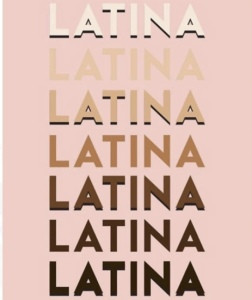
A military veteran herself, Luna’s early posts included mentions of oft-forgotten or ignored Black and Native American military members, celebrating them for their valor and patriotism while acknowledging and counteracting the erasure of minoritized Americans. She posted pictures of herself holding various firearms while wearing Gen-Z approved outfits and shared posts encouraging Latinas to embrace their heritage regardless of their skin color. Her content stood out from what one would typically see on conservative pages, and Luna’s captions would continually emphasize the point that not all Latinas hold the same political beliefs and values, critiquing the liberal homogenizing of Latina political thought.[2] Luna’s posts celebrated her own heritage (Figure 1) while invoking the importance of “diversity” in understanding Latina political beliefs.
Her online presence was soon noticed by Charlie Kirk, the founder of the right-wing student group Turning Point USA (TPUSA). Kirk recruited her to his staff, and Luna soon began leading TPUSA’s Latino outreach, including a 2021 “Latino Leadership Summit” that attracted some 350 participants. Building on this organizing experience and polishing her political skills and public identity, Luna won a swing district in Florida in 2022.

In 2025, with well over half a million followers on Instagram and over one-hundred thousand on X and Facebook, respectively, Luna’s political influence has reached far beyond her Florida district. To be sure, Congresswoman Luna officially holds the standard right-wing positions against critical race theory and “radical left-wing gender theory.” However, her social media accounts reveal her more unique appeal to women and people of color. Luna embraces an emerging multicultural conservatism that uses aesthetics and rhetoric ordinarily seen on the left as vehicles for conservative messages. Paulina Luna’s hard right politics are woven into an Instagram profile full of influencer-like messaging about protecting nature and wildlife, photos from international travel, and videos of musicians like Lauryn Hill, 50 Cent and Lil Wayne.[3] She focuses directly on her identity as a Latina in several posts, reiterating that the left limits her and other women of color by making assumptions about their politics, thus denying them self-determination and agency. “Gun Rights are Women’s Rights,” reads one post (Figure 2), a collaboration with the National Rifle Association. Political memes like these generate tens of thousands of likes, exemplifying a Latina public identity that is self-possessed, attentive to the meaning of race and gendered identities while being deeply conservative.
Another inroad for Latina women to the right comes from social media influencers who do not openly express conservative ideas or engage outwardly with anything political. One example is that of multiracial Mormon model-turned-momfluencer Nara Smith. Smith is a TikTok native, who gained popularity for her cooking videos and lifestyle content. (Rolling Stone titled its profile of Smith , “Meet the Hot Young Tradwife Making Everyone on the Internet Mad.”)[4] Even though most young mothers, especially young moms of color (Smith is 22, and has three children) – cannot afford the lifestyle she portrays on her social media,[5] Smith is marketed and embraced as lifestyle inspiration for young women. Girls of color, especially Black and Hispanic girls who may have been isolated from prior conservative trad-wife content, are invited to imagine themselves in the world of housewifery by a beautiful, multiracial model, who is contemporary in both her aesthetic and social media savvy.
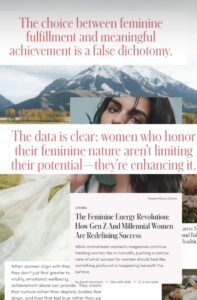
Brittany Martinez, co-founder of conservative women’s magazine EVIE and a popular conservative Latina influencer, has publicly defended Smith’s content, differentiating Smith from the dominant, and predominantly white, trad-wife movement. Martinez understands, as do the other social media influencers promoting right-wing ideology, that the conventional conservative approach of promoting homemaking and domestic labor as a duty are less likely to appeal to young women of color, who have yet to be substantially removed from the traditional paradigm of domestic labor as expectation. Indeed, young women of color do not need to be reminded that homemaking is duty, as it is made abundantly clear that labor inside the home is a task left for Black and Hispanic women. However, Smith and Martinez reframe domestic labor as a fashionable, modern and glamorous choice that women of color can embrace rather than just accept, and as an appealing alternative to the demands of work and career for a young mother.
Divine Femininity, Cycle Syncing, and Conspiracy
Along with the use of their platforms to further explicitly political goals – election to an institutional body or alignment with the Republican Party platform – conservative Latina influencers connect their listeners to conservative ideas through the creation and endorsement of “conspirituality.” “Conspirituality” is a portmanteau coined by sociologists in 2011 to refer to “a politico-spiritual philosophy based on two core convictions…1. A secret group covertly controls, or is trying to control, the political and social order. 2. Humanity is undergoing a ‘paradigm shift’ in consciousness, or awareness, so solutions to (1) lie in acting in accordance with an awakened ‘new paradigm’ worldview.”[6] Among the Latina conservative influencers and social media platforms, the secret group is typically and broadly referred to as “Big Pharma.”
For the online ‘health-fluencer’ sphere – of which Brittany Martinez is a member – Big Pharma is the primary culprit to be blamed for misguided and potentially dangerous promotion of birth control and other contraceptive initiatives and is victimizing young women of color in its pursuit of their desire for profits at the expense of women’s autonomy and a “true” feminine consciousness. Instead of focusing on a traditional conservative issue, abortion, these Latina healthfluencers champion the idea that birth control is anti-woman, anti-woman of color, and particularly dangerous for Latinas, given the long history of sterilization, eugenics, and other forms of reproductive injustice that have targeted Latinas in the U.S. and women in Latin America.[7] While this skepticism is rooted in real histories, it glosses the work of several scholars who have illuminated Latina historical struggles for access to safe reproductive care. [8] These influencers cite U.S. government programs that resulted in the sterilization of countless Puerto Rican women, both on the island and in places like New York to demonstrate that the American government does not care about the health and well-being of Latina and Latin American women.[9] A tweet from Martinez’ EVIE Magazine account reads, “We’ve been convinced by Big Pharma, doctors we trusted, educators, the media, and, in many cases, our own family and friends that the side effects of the hormonal birth control pill were worth it to ensure we didn’t get pregnant, break out, have menstrual cramps, etc.”[10].
For Latinas in this health and wellness-focused digital space, an obsession with ‘natural family planning’ and fertility, which emerges directly from traditionalist views on gender roles, are combined with the use of marianismo[11]– a Latin American ‘divine femininity.’ Encouraging submissiveness, chastity, and spiritual leadership within the family, marianismo promotes a rigid notion of reproduction that demands distancing from nontraditional family structures and for conservative Latina health-fluencers this also requires distance from the medical establishment. Along with the construction of pharmaceutical companies as untrustworthy and exploitative actors, a view shared by many, [12] – this focus on an essential feminine quality is a tactic used by those in the conservative health-fluencer sphere to advance deeply reactionary views on gender.
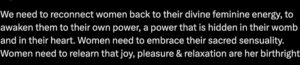
The mysticization of motherhood and fertility (Figure 4) also advances the right’s anti-transgender agenda, making “true womanhood” something unattainable in the absence of female reproductive organs that function “properly.” By transforming femininity into a transcendentalism accessible only through, or at least, located primarily in, the biologically female body’s ability to reproduce, trans women become entirely erased from any notions of womanhood. Here, transness itself becomes not only inconceivable, but spiritually regressive.
The connection of empowerment to hormones and biology was particularly embraced by Brittany Martinez, who founded a startup app called “28” that secured investment from right-wing billionaire Peter Thiel and uses the language of conspirituality in its marketing to women.[13] 28 announced itself as a “femtech” company that provides wellness, nutrition and workout advice based on the users’ menstrual cycles, and advocates the rhythm method over other forms of contraception to prevent unwanted pregnancies.
On its website, 28 advertises itself as a tool of enlightenment and empowerment. One section reads, “Women have been locked in the passenger seats of their own bodies—our education system failed us, doctors gaslit us, and hormonal birth control promised freedom but tricked our bodies into dysfunction and pain. Today, we begin anew. Today, a revolution begins. I’ll see you on the journey.”[14] This language of embarking on a “journey” is a recurring feature of conspirituality, in which quasi-mystical references are used to describe what are often implicit conservative practices and policy goals.
Further, the use of Gen Z terms like “gaslit” is another example of the deployment of liberal or left-associated language by the right. Martinez and her investors understand how to speak to young women, especially those who may feel victimized by a medical establishment that has long been associated with the authority of white men. Using the social capital gained by her conventionally attractive appearance and ‘politically neutral’ online presence, Martinez sells young women on medical practices that reject giving women access to a full range of reproductive options. Accordingly, these influencers frame “hormonal birth control” as the primary obstacle constraining women’s everyday lives and choices. Contraceptive pills are poised as tools of patriarchy, preventing women from achieving a truer feminine consciousness, impeding a woman’s ability to realize her gendered role in society and thus limiting her worth as a person. In podcasts and articles by health and wellness influencers, including Turning Point USA’s Alex Clark, conservative Latinas are often given a platform to speak about birth control and its impacts on Latina women.[15] Role models like Nara Smith and other young moms are foregrounded as examples of the elevated lifestyle available to women of color who reject the medical establishment and embrace young motherhood.
A neoliberal wellness culture has emerged from this complicated politico-spiritual position. According to conservative Latina influencers, freedom for women of color in the face of Big Pharma, and the government at large, can be achieved by individual choices to eat “whole foods,” grown on one’s private property, provide only for one’s nuclear family, and to abstain from using drugs like vaccines or birth control. Even giving birth at a hospital is often framed as dangerous for young mothers, a talking point employed by the right that draws upon the very real crisis in maternal mortality rates among women of color in the US. [16] While some would see in this research evidence of the need for more social welfare programs and health care reforms to guarantee equitable treatment for all mothers, these conservative Latinas weaponize these findings to argue that Big Pharma, hospitals, and the medical establishment as a whole have failed them, especially when it comes to childbirth, and that women should, therefore, reject modern contraception and reproductive medicine more generally. Thus their project is framed not as an assault on women‘s rights and choices, but one grounded in empowerment. Fusing the legitimate concerns of women of color surrounding health and identity with their own brand of conspirituality, conservatives are crafting new inroads to appeal to young Latinas, not by addressing policies around abortion access or claims about small government but through appealing aesthetics, culturally-attuned influencers, and a discourse that magnifies a broad range of concerns, from the QAnon conspiracy to the under-researched side effects of contraceptive pills. Far from distancing themselves from their identity as conservatives of color often may have done in the past, Latina conservatives embrace their unique positioning as women of color to create new connections into conservative politics and movements. While many of the underlying politics driving these conservative movements will do little to address the material needs and interests of such women, the ways their appeals and approaches speak to the real issues in young women’s lives must be taken seriously.
Endnotes
[1]Navarrette, Ruben. “ Remembering Reagan.” Remembering Reagan. Accessed July 2, 2025. http://www.latinomagazine.com/fall2011/journal/reaganremb.htm.
[2] “Instagram June 3, 2023 https://www.instagram.com/realannapaulina/?hl=en.
[3] “Instagram. September 24, 2016” https://www.instagram.com/realannapaulina/?hl=en.
[4] Dickson, Ej. “Meet the Hot Young Tradwife Making Everyone on the Internet Mad.” Rolling Stone, August 30, 2024. https://www.rollingstone.com/culture/culture-features/nara-smith-lucky-blue-smith-tiktok-mormon-tradwife-1234979241/.
[5] Sun, Shengwei. “For Young Mothers during COVID, Employment Does Not Equal Security.” IWPR, January 28, 2025. https://iwpr.org/young-black-and-single-mothers-during-covid/.
[6] Ward, Charlotte, and David Voas. “The Emergence of Conspirituality.” Journal of Contemporary Religion 26, no. 1 (January 1, 2011): 103–21. https://doi.org/10.1080/13537903.2011.539846.
[7] Presch, S., & UnidosUS. (2022, January 6). The long history of forced sterilization of latinas. UnidosUS. https://unidosus.org/blog/2021/12/16/the-long-history-of-forced-sterilization-of-latinas/
[8] For further on this see: Murillo, Lina-Maria,. Fighting for Control : Power, Reproductive Care, and Race in the US-Mexico Borderlands. Chapel Hill :The University of North Carolina Press, 2025; Briggs, Laura. Reproducing Empire : Race, Sex, Science, and U.S. Imperialism in Puerto Rico. Berkeley :University of California Press, 2003; Gutiérrez, Elena R., Fertile Matters : the Politics of Mexican-Origin Women’s Reproduction. Austin, Texas :University of Texas Press, 2008.
[9] Longoria, Jaime, Daniel Acosta, Shaydanay Urbani, and Rory Smith. “A Limiting Lens: How Vaccine Misinformation Has Influenced Hispanic Conversations Online.” First Draft, September 2, 2022. https://firstdraftnews.org/long-form-article/covid19-vaccine-misinformation-hispanic-latinx-social-media/.
[10] https://x.com/Evie_Magazine/status/1646193302515982337
For a review of medical side-effects of hormonal oral contraceptives, see: Hee L, Kettner LO, Vejtorp M. Continuous use of oral contraceptives: An overview of effects and side-effects. Acta Obstet Gynecol Scand. 2012;91:DOI:10.1111/aogs.12036.
[11] Perrotte, Martin, and Piña‐Watson, “Traditional Feminine Gender Roles, Alcohol Use, and Protective
Behavioral Strategies Among Latina College Students.”
[12] “News: Help Majority Staff Releases Report Revealing Big Pharma’s Business Model ” Senator Bernie Sanders,”
[13] Ibid.
[14] https://28.co/
[15] Gim, Esther. “Social Media ‘Wellness’ Influencers Peddle Lies about Birth Control.” Rewire News Group, November 7, 2024. https://rewirenewsgroup.com/2023/03/20/social-media-wellness-influencers-peddle-lies-about-birth-control/.
[16] MacDorman, M. F., Thoma, M., Declcerq, E., & Howell, E. A. (2021b). Racial and ethnic disparities in maternal mortality in the United States using Enhanced Vital Records, 2016‒2017. American Journal of Public Health, 111(9), 1673–1681. https://doi.org/10.2105/ajph.2021.306375
https://www.cnbc.com/2023/10/13/pregnant-latinas-face-greater-maternal-health-concerns.html